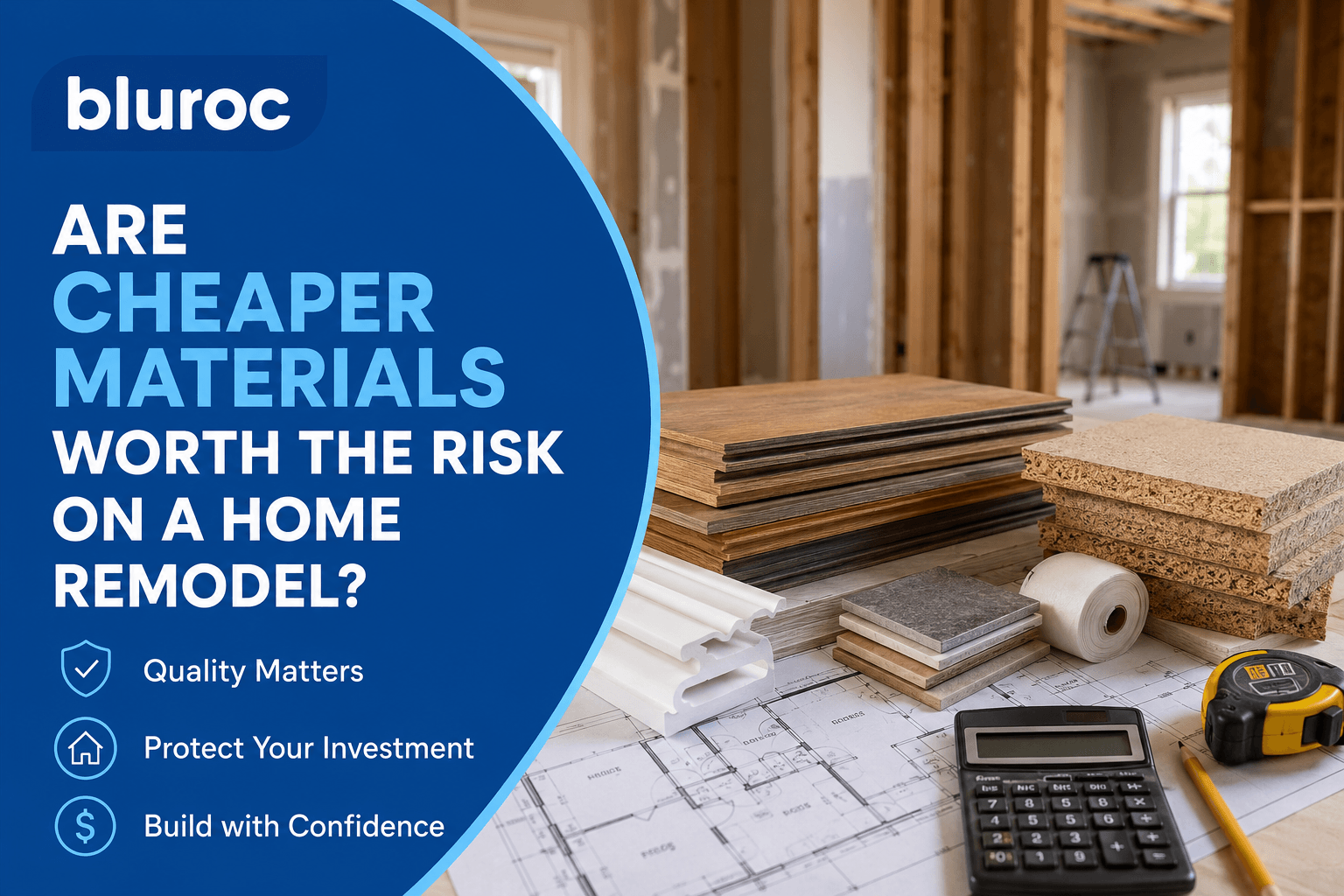
Are Cheaper Materials Worth the Risk on a Home Remodel?
September 27, 2026
The Question Every Homeowner Faces Mid-Estimate
Every homeowner hits the same wall at some point during a remodel estimate: the number is higher than expected, and cutting material costs feels like the obvious solution. Why pay for premium tile when a cheaper version looks nearly identical in the showroom? Why choose solid wood cabinets when a lower-cost alternative seems just as durable on the spec sheet?
These are fair questions. The honest answer is that sometimes lower-cost materials make perfect sense, and sometimes they carry risks that will cost you far more in the long run. Knowing the difference is what separates a smart remodel from an expensive mistake.
Where Budget-Friendly Materials Hold Up Fine
Not all cost-cutting on materials carries risk. There are categories where mid-range or value-tier products perform nearly as well as premium options and where the savings are genuine and lasting. These are areas where going with a more affordable product is a smart financial decision, not a compromise.
- Interior paint in low-traffic spaces like guest bedrooms and closets
- Basic electrical fixtures in utility rooms, garages, and storage areas
- Standard insulation in non-extreme climate zones of the home
- Interior doors in secondary rooms that see light daily use
- Window treatments and hardware in rarely used spaces
In each of these cases, the product is not structurally load-bearing, is not exposed to heavy wear, and can be replaced without major disruption if it eventually fails.
Where Cheaper Materials Create Real Problems
The calculus changes when you are dealing with materials that affect structural integrity, moisture resistance, long-term durability, or safety. Cutting costs in these categories often means paying significantly more later.
Flooring in High-Traffic and Moisture-Prone Areas
In Pleasant Grove, Utah kitchens, bathrooms, mudrooms, and entryways, flooring is constantly subjected to foot traffic, moisture, cleaning chemicals, and seasonal temperature swings. Budget LVP and laminate products often use thinner wear layers that scuff, dent, and peel within a few years. Replacing failed flooring means tearing out not just the product but adhesive, subfloor prep, and trim work. The cost of doing it twice easily exceeds whatever was saved the first time.
Cabinetry in Kitchens and Bathrooms
Cabinets are among the most heavily used surfaces in any home. Particleboard-core cabinets with thin thermofoil faces are prone to swelling in humid environments and delaminating at the edges over time. In Utah County, where summer humidity and winter heating cycles create significant seasonal moisture swings, cabinet quality matters more than in stable climates. The cost gap between a mid-grade plywood-core cabinet and a bargain option can disappear entirely once you factor in replacement within five to seven years.
Roofing and Exterior Cladding
Exterior materials face UV exposure, freeze-thaw cycles, and wind loads unique to Utah. Budget asphalt shingles with lower impact ratings, inexpensive flashing, or thin exterior trim materials may save money at installation but require repair or replacement significantly earlier than their premium counterparts. A premature roof failure in Utah County creates interior water damage that multiplies the original cost of the inferior material many times over.
Tile, Grout, and Waterproofing in Wet Areas
In bathroom and shower tile work, what goes behind the tile matters as much as the tile itself. Budget waterproofing membranes, low-quality thinset, or improperly mixed grout allow moisture to migrate into wall cavities and subfloors. Many renovation callbacks and mold remediation jobs across Utah County and Salt Lake City trace directly back to wet area failures caused by corners cut on materials or installation quality.
Frequently Asked Questions
Can I supply my own materials to save money on a remodel?
Some contractors allow it, but this shifts responsibility for product quality, delivery timing, and compatibility entirely to you. If a material you supplied causes a problem, the contractor may not warranty the associated labor. Discuss this arrangement explicitly before assuming it is acceptable.
How do I evaluate whether a lower-cost product is actually comparable?
Ask for product specifications, not just appearance. Compare thickness, core composition, warranty terms, and independent testing ratings. A $3-per-square-foot tile and a $1.50 tile can look identical on the showroom floor while carrying very different wear ratings.
Do cheaper materials affect my home's resale value?
Yes, in some cases significantly. Experienced buyers and home inspectors can identify low-grade finishes. Appraisers in active markets like Pleasant Grove also compare finish quality when valuing comparable properties. A remodel done with budget materials may not return the same value at sale.
Are there situations where premium materials are overkill?
Absolutely. In a rental property, a vacation home, or a house you plan to sell within a few years, the economic case for premium materials weakens considerably. Match material quality to the expected use cycle and who will be living with the results.
What is the best way to reduce remodel costs without sacrificing quality?
Prioritize labor-intensive but material-light changes like painting, hardware swaps, and fixture updates. Keep existing layouts where plumbing and electrical do not need to move. And be strategic about where you invest in premium materials versus where standard products are genuinely sufficient.
Spend Smart, Not Just Less
The question is never simply cheap versus expensive. It is about understanding where quality actually matters for the long-term performance of your home and where it does not. A well-informed homeowner who knows the difference can make real tradeoffs without taking on hidden risk.
Bluroc Development has been navigating these decisions with clients across Pleasant Grove and Utah County for nearly three decades. We help homeowners understand not just what materials cost upfront, but what they are likely to cost over the life of the home. If you are planning a remodel and want honest guidance on where to invest and where to save, contact us for a free consultation.