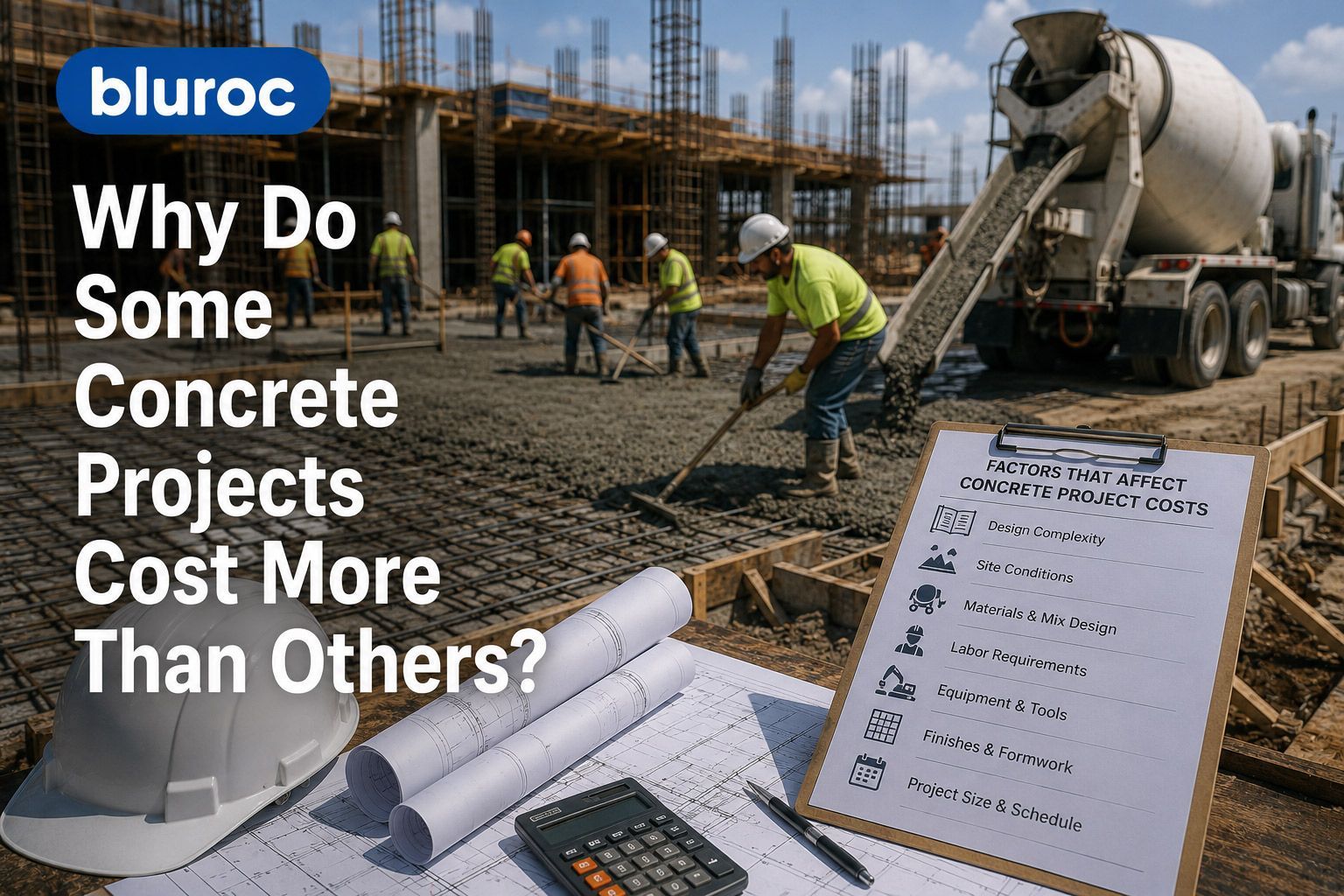
Why Do Some Concrete Projects Cost More Than Others?
July 26, 2026
Concrete Costs Are Usually Determined by Complexity, Not Just Material
Many people assume concrete pricing is mostly based on how much concrete gets poured. While material volume does affect the budget, it is rarely the main reason one project costs significantly more than another.
Concrete installation depends heavily on preparation work, structural requirements, site conditions, reinforcement systems, finish quality, and labor coordination. A simple residential walkway and a commercial equipment slab may both use concrete, but the amount of planning, excavation, reinforcement, and finishing required behind each project can be completely different.
For residential and commercial construction projects throughout Utah, the surrounding construction demands often influence pricing more heavily than the concrete material itself.
The Purpose of the Project Changes the Construction Requirements
Not every concrete project is designed for the same type of use. Some surfaces are primarily decorative or residential, while others must support heavy structural loads, commercial traffic, or industrial equipment over long periods of time.
Because of that, the intended purpose of the slab usually changes the amount of preparation, reinforcement, and engineering required before installation begins.
Residential Flatwork
Residential flatwork projects are often designed around everyday usability and appearance. Patios, sidewalks, pool decks, and standard driveways generally require simpler forming systems and more moderate reinforcement depending on the expected traffic and soil conditions.
These projects are usually more flexible from a design standpoint because they do not carry the same structural demands as heavier commercial installations.
Commercial and Structural Concrete
Commercial slabs and structural concrete projects often require much more coordination before concrete can even be poured.
The comparison below shows how project purpose commonly affects construction scope.
| Project Type | Common Construction Demands |
|---|---|
| Residential patio | Standard reinforcement and finish work |
| Residential driveway | Vehicle-load support and thicker sections |
| Commercial slab | Engineered reinforcement and structural support |
| Equipment foundation | Heavy-duty load-bearing design |
| Industrial concrete | Specialized durability and finishing requirements |
As structural demands increase, excavation depth, reinforcement density, forming complexity, and inspection coordination usually increase as well.
Site Conditions Strongly Affect Concrete Pricing
Concrete installation depends heavily on the condition of the site before preparation begins.
Some properties allow excavation and forming work to move efficiently, while others create additional labor and equipment challenges long before the concrete truck arrives.
Stable and Accessible Sites
Projects with stable soil and open access conditions are usually easier to prepare. Equipment can move more efficiently, excavation tends to progress faster, and forming layouts are often simpler to coordinate.
This generally improves labor efficiency throughout the installation process.
Difficult Site Conditions
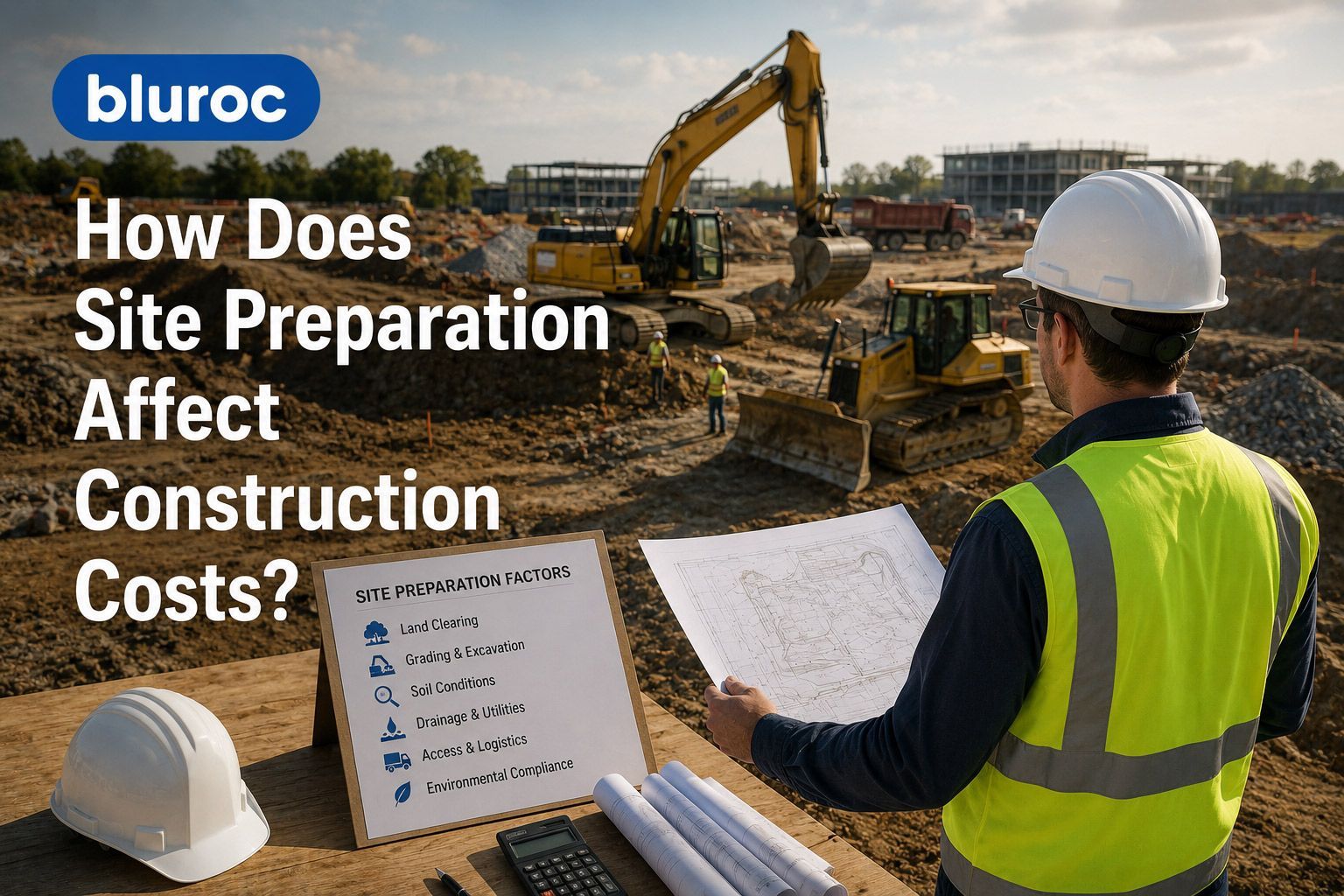
Certain Utah properties contain unstable soil, rocky terrain, drainage problems, or restricted access areas that complicate preparation work significantly.
These conditions may require additional:
- Excavation
- Soil stabilization
- Drainage correction
- Grading work
- Equipment coordination
As preparation complexity increases, labor hours and operating costs usually increase alongside it.
Reinforcement Requirements Affect Both Labor and Material Costs
Concrete handles compression well on its own, but reinforcement is often necessary to improve durability and structural performance over time.
The amount of reinforcement required depends on how the slab will function once the project is complete.
Moderate Reinforcement Applications
Some residential projects only require moderate reinforcement systems because the slab supports lighter daily use.
These installations may use standard rebar spacing, wire mesh, or fiber reinforcement depending on slab design and soil conditions.
Because the reinforcement layouts are usually simpler, installation tends to move faster and requires less coordination overall.
Heavy Reinforcement Systems
Commercial and structural projects often require more advanced reinforcement layouts to support larger loads and heavier long-term use.
This process usually becomes more labor-intensive because crews must coordinate reinforcement placement carefully before concrete installation begins.
Projects with heavier reinforcement often require:
- More detailed engineering
- Increased slab thickness
- Additional forming support
- More inspection coordination
- Longer preparation time
As reinforcement complexity increases, installation speed generally decreases.
Finish Quality Can Significantly Change Labor Time
Concrete finishing requirements vary heavily depending on whether the surface is designed primarily for utility or appearance.
Basic utility surfaces usually prioritize durability and function. Decorative surfaces require much more precision during placement and curing.
Standard Utility Finishes
Warehouse slabs, utility pads, and service surfaces are often focused on long-term durability rather than decorative detail.
These projects usually involve more straightforward finishing methods because visual consistency is not the primary priority.
Decorative Concrete Finishes
Decorative concrete installations often require careful timing and surface control throughout the finishing process.
The table below shows how different decorative finishes increase project complexity.
| Finish Type | Why Labor Complexity Increases |
|---|---|
| Stamped concrete | Pattern timing and surface consistency |
| Exposed aggregate | Surface treatment coordination |
| Colored concrete | Consistent mixing and finishing control |
| Polished concrete | Grinding and extended finishing stages |
| Decorative scoring | Precision layout and cutting work |
These finishes often require additional labor because crews must maintain tighter surface consistency throughout installation and curing.
Slab Thickness and Structural Design Affect More Than Material Volume
Thicker concrete sections do not only increase material usage. They also affect excavation, reinforcement, forming systems, and preparation work throughout the project.
A standard residential slab may only need moderate thickness depending on foot traffic, drainage conditions, and vehicle usage. Commercial and industrial slabs often require deeper excavation, engineered compaction, and larger reinforcement systems to support heavier operational loads.
As structural requirements increase, the installation process usually becomes slower and more coordination-intensive.
Weather Conditions Affect Concrete Installation Efficiency
Concrete installation depends heavily on environmental conditions during placement and curing.
Utah weather conditions can significantly affect how efficiently crews complete the work.
Cold weather often requires additional curing protection and scheduling adjustments to prevent freezing during the curing process. Hot and dry conditions create a different challenge because concrete may cure too quickly, reducing finishing time and increasing the risk of surface inconsistency.
Both extremes affect labor coordination, scheduling flexibility, and curing management throughout the project.
Accessibility Directly Impacts Labor Efficiency
Concrete crews work most efficiently when trucks, equipment, and materials can move freely throughout the site.
Restricted access conditions often slow installation because machinery cannot maneuver easily and material staging becomes more difficult to coordinate.
Projects near occupied buildings, active businesses, or tight urban environments may require phased scheduling, limited work hours, smaller equipment, or additional safety coordination during installation.
These conditions reduce overall production efficiency compared to open construction environments.
Better Planning Helps Improve Cost Control
Concrete projects usually become more efficient when preparation and coordination happen thoroughly before installation begins.
The process often moves more smoothly when:
- Site conditions are evaluated early
- Drainage planning is completed beforehand
- Reinforcement layouts are finalized before forming begins
- Equipment access is planned realistically
- Structural requirements are clearly defined early
Strong planning helps reduce scheduling conflicts, labor inefficiencies, and installation delays during active construction.
Frequently Asked Questions About Concrete Project Costs
Why do some concrete projects cost more than others?
Concrete pricing varies based on site conditions, reinforcement requirements, slab design, finish quality, accessibility, and structural complexity.
Does decorative concrete increase labor costs?
Yes. Decorative finishes usually require more precision, timing control, and finishing labor throughout installation.
Can poor soil conditions increase concrete costs?
Yes. Unstable or rocky soil may require additional excavation, stabilization, grading, or engineered preparation before pouring can begin safely.
Why does reinforcement affect pricing so much?
Heavier reinforcement systems require more material, preparation time, inspection coordination, and installation labor.
Can weather affect concrete installation costs?
Yes. Extreme heat, freezing temperatures, rain, and rapid curing conditions can all affect scheduling and labor efficiency.
Conclusion
Concrete project costs vary because every site and structural requirement creates different construction demands. Site preparation, reinforcement systems, slab design, finish quality, accessibility, and environmental conditions all influence how much labor, coordination, and preparation the project requires.
For residential and commercial construction projects throughout Utah, careful planning and realistic site evaluation are often some of the biggest factors in improving efficiency, maintaining concrete quality, and controlling long-term construction costs.
Bluroc Development works on concrete and construction projects across Utah with a focus on structural performance, coordinated planning, and long-term durability throughout every phase of the build process.